Driving Test in an Unfamiliar Area: How to Prepare
· 6 min read · Thomas Wolten
Not everyone takes their test where they live. How to explore an unfamiliar area, learn to read it and stay calm when nothing feels familiar.

In this article
- Why it feels different
- Explore in advance on maps and images
- Drive around once, calmly
- Learn to read the surroundings
- Practise in several unfamiliar places
- Differences between regions
- Preparing mentally
- What if you don't understand something?
- What you take away from every new route
- A three-step exploration plan
- What to do about your satnav
- An unfamiliar area is also an opportunity
Not everyone can take their practical driving test near where they live. Perhaps the nearest exam centre is in another city, or the waiting time there is shorter. The result: you have to drive on streets you don't know. That calls for different preparation than when you know every corner of your own neighbourhood.
Why it feels different
In your own neighbourhood you automatically know where the dangerous junctions are, where cyclists often cross and how long the lights last. In an unfamiliar area you lack that safety net. You have to read everything consciously: signs, markings, junctions. That takes more attention, which explains why many candidates feel unsure.
But it is also exactly what the test asks of you. An examiner doesn't expect you to know the streets. They expect you to read them.
Explore in advance on maps and images
You can do a lot without being there physically. Look at the area around the exam centre on an online map, using satellite and street-level images. You see what junctions look like, where roundabouts are and how wide the roads are. Take note of the approach route, the entrance to the centre, places that can get busy, such as schools or shopping centres, and the type of roads: narrow streets, wide avenues, industrial zones. Keep in mind that images can be out of date and that roadworks can change the situation.
On this website you will find practice routes with a map for each exam centre, so you get an idea of the situations in the area.
Drive around once, calmly
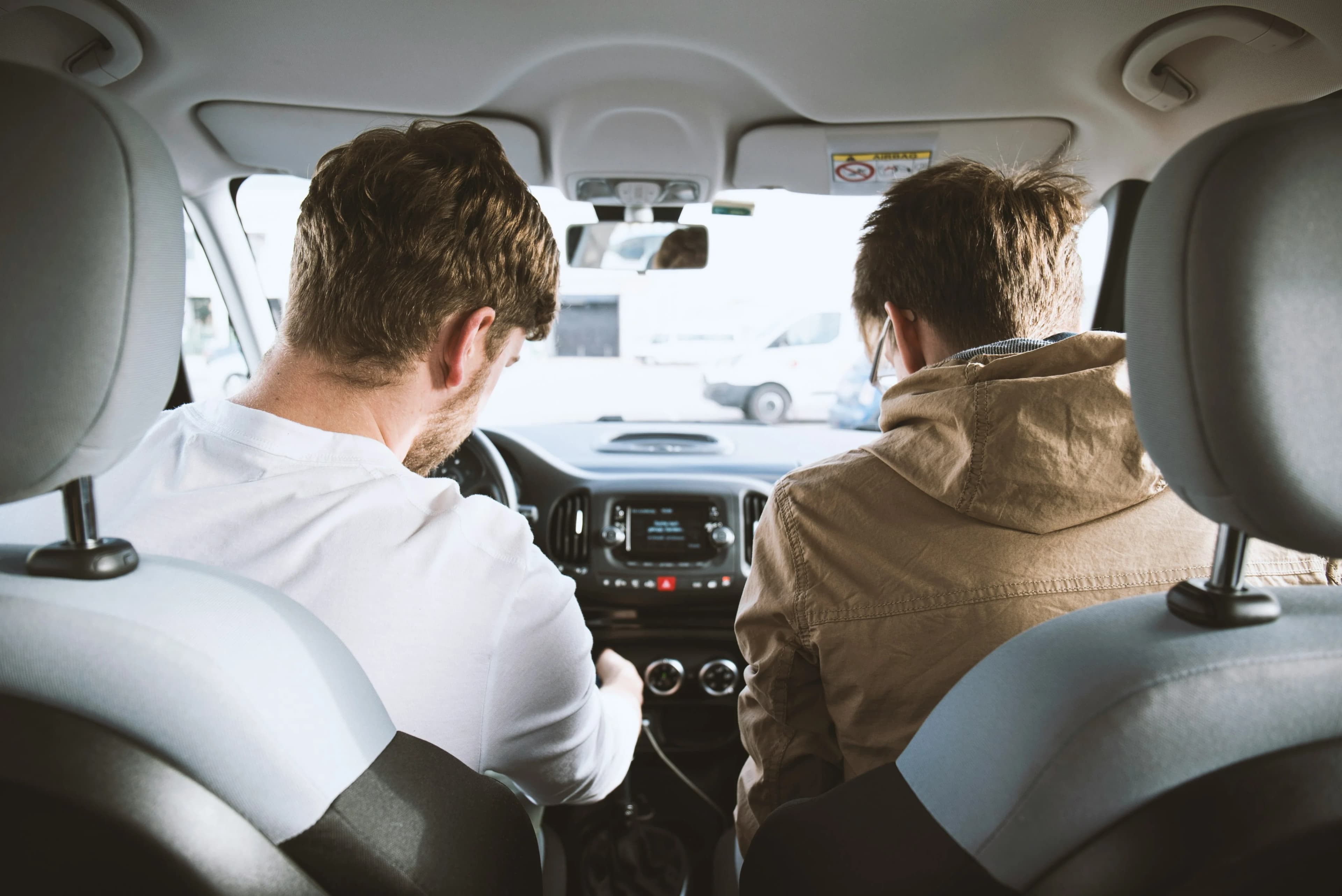
If you can, go to the exam centre at least once and drive around the area calmly, preferably with your supervisor. The aim is not to learn the route by heart, but to get a feel for the traffic, the width of the roads and the typical situations. Preferably do this at a time similar to your test time, because a route is very different on a Saturday morning than on a weekday at rush hour.
You could also drive the route as a passenger first, so you can look around without having to steer. Make notes or take photos of tricky spots so you can look at them again later.
Learn to read the surroundings
In an unfamiliar area you constantly have to process what you see. Practise that deliberately. Read road signs well in advance. Use road markings to choose the right lane. Pay attention to where your speed changes. And at every junction ask yourself: who has priority here?
A fixed routine helps against uncertainty. You scan ahead, name what you see (junction, priority arrangement, traffic), you decide and you carry it out calmly and consistently. By following the same steps every time, you don't have to work out afresh what to do in each new situation.
Practise in several unfamiliar places
The more variety, the less an unfamiliar area throws you. Drive a route in another municipality, another district or on a road with a different character from what you are used to. In your own area, deliberately seek out places you normally avoid: busy roundabouts, large junctions, new neighbourhoods. That way you widen your comfort zone.
Differences between regions
The rules are the same everywhere in Belgium, but the situation can differ: the character of the roads, the traffic, the layout of junctions and the language on the direction signs. If you take your test in a different language region, it is a good idea to look at the common place and street names beforehand, so that direction signs don't come as a surprise. The road signs themselves are the same everywhere.
Preparing mentally
Tell yourself that you don't have to know everything. What you need to be able to do is react safely and calmly to what you see. If you miss a turning, simply carry on and follow the examiner's next instruction. A missed turning is not a mistake as long as you keep driving safely.
Arrive in good time, so you don't end up short of time. Take a few minutes of calm before you start: waiting in the car park to collect yourself is not wasted time.
What if you don't understand something?
You may come across a junction with an unusual layout. Stay calm, slow down and read all the signage. If you are really in doubt, choose the safe option: slow down, stop if necessary and only drive on when you are sure. Examiners understand caution, not recklessness.
What you take away from every new route
A three-step exploration plan
If you want to get to know an unfamiliar area without being able to drive there every day, you can approach it in three steps.
In the first step you work with maps. Look for the main approach routes to the exam centre, the roundabouts and the junctions with traffic lights. Draw or note down a simple sketch for yourself, not to memorise, but to understand how the area fits together.
In the second step you drive around the area, if possible, once or twice as a passenger or accompanied. Don't look at the road itself, but at patterns: are the streets wide or narrow, is there a lot of cycle traffic, are there schools or shops nearby, how are the junctions laid out?
In the third step you drive yourself, first at a quiet time, later at a time similar to your test time. You will notice for yourself where you feel unsure, and you can practise that specifically.
What to do about your satnav
Many candidates are used to a navigation system that shows them the way, and feel lost without it. On the test you get instructions from the examiner, not from an app. So also practise without navigation: have your supervisor give the directions, just as an examiner would, and make sure you choose the right lane in good time. Someone who is used to a voice announcing what is coming long in advance has to learn to look ahead themselves.
An unfamiliar area is also an opportunity
It sounds counterintuitive, but someone who learns to drive in an unfamiliar area often becomes a better driver than someone who only practises on familiar roads. You learn not to drive on autopilot, but on observation. That gives you a skill you will need again and again after the test, every time you drive in a new town or district.
See every new area as an exercise in observing and adapting. What you learn on an unfamiliar route, you can apply tomorrow on another. After a few new routes you will notice that unexpected situations startle you less and that you recognise patterns in junctions, signs and traffic more quickly. That flexibility is exactly what a test and later traffic will ask of you.