Driving in Rain, Fog and Glare: Driving Test Tips
· 6 min read · Thomas Wolten
You don't choose your test day, so you don't choose the weather either. Here is how to adapt your driving to wet roads, limited visibility and low sun.
In this article
- Rain and wet roads
- Aquaplaning: what do you do?
- Looking after your visibility
- Misted windows
- Fog
- Low sun and glare
- In the dark
- Rain in town
- What the examiner wants to see
- A short checklist
- Practising in difficult conditions
- What if the test is postponed?
- The difference between braking on dry and wet roads
- What you do differently when turning and pulling away
- A calm drive as practice
You can't choose your test day, so you can't choose the weather either. Rain, fog or a low sun make driving harder, and the examiner expects you to adapt to it. That doesn't mean your test will be harder, but that you need to look and drive differently.
Rain and wet roads
On a wet road your braking distance is longer. So keep clearly more distance to the car in front than normal. Start braking earlier and do it gradually: braking hard on a wet road increases the risk of skidding. Take bends more slowly too, so that you don't lose grip.
Also watch out for puddles and road markings. Puddles can cause aquaplaning, where your tyres lose contact with the road surface and you lose control. White markings and tram tracks are also often slippery in the rain.
Aquaplaning: what do you do?
You notice it because the steering suddenly feels light or the car seems to float. Stay calm. Take your foot off the accelerator and don't brake abruptly. Keep the steering wheel straight and avoid sudden movements. Wait until you feel grip again and only then brake gently. Of course, the best thing is to avoid aquaplaning by adjusting your speed in heavy rain, avoiding puddles and keeping your tyres in good condition.
Looking after your visibility
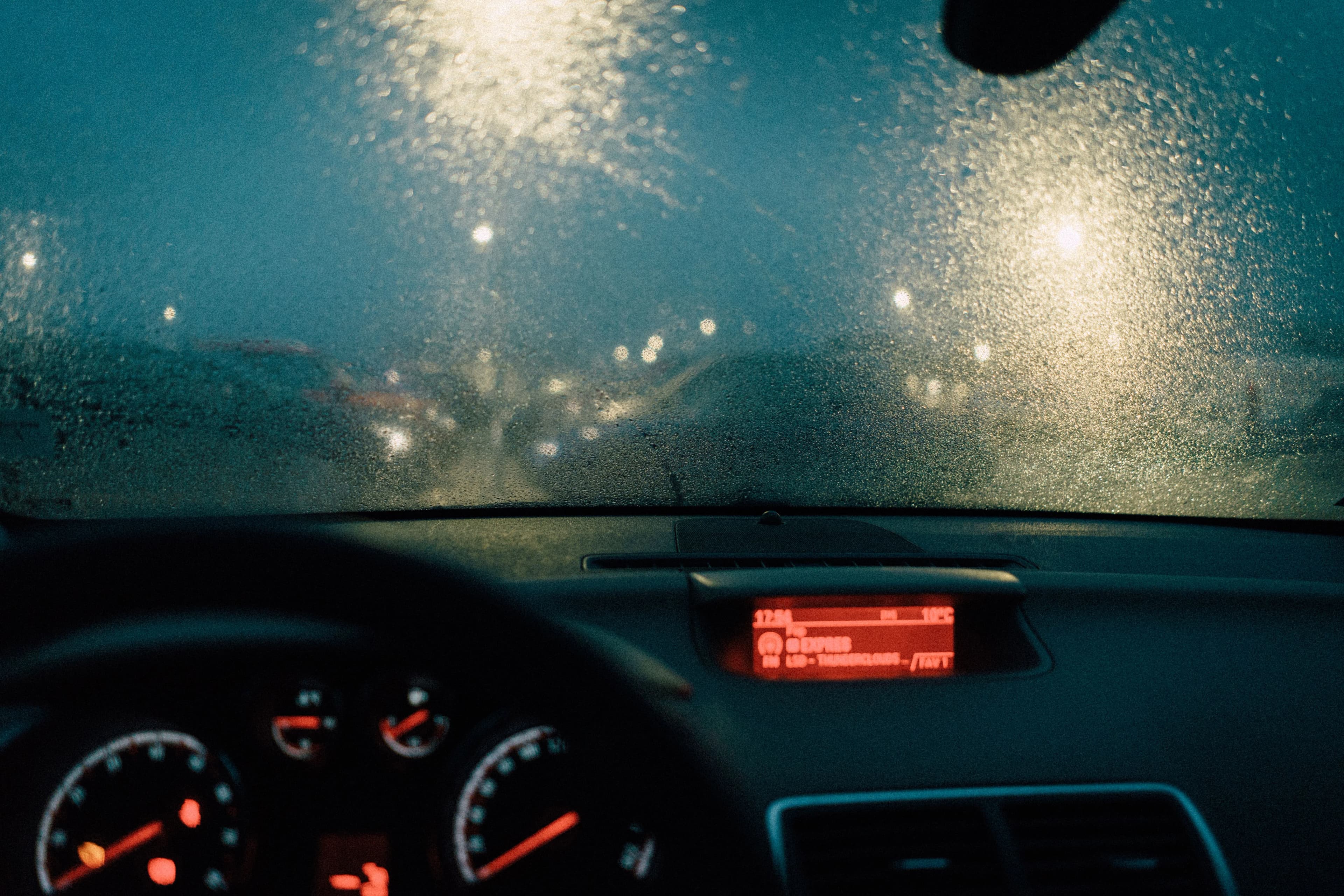
Set your windscreen wipers to the right speed and use the heating or air conditioning to keep your windows clear. Check that your mirrors aren't misted up and switch on your dipped headlights when visibility is limited. Do all of this before you set off: fumbling for a button while driving under time pressure is a dangerous distraction.
Good preparation starts with your car, by the way. Regularly check that your wipers don't leave streaks, that your tyres have enough tread and are properly inflated, that your lights work and that your windows are clean, on the inside too.
Misted windows
Misted windows are especially a problem when there are several people in the car. Switch on the ventilation and, if needed, the air conditioning, direct the airflow at the windscreen and open a window if necessary. Do this before you set off, so that your view is clear from the start.
Fog
In dense fog you reduce your speed sharply and increase your following distance. Use dipped headlights. Fog lights are only permitted in certain conditions, so check when you are allowed to use them. Don't drive too close behind the tail lights of the car in front, and don't let yourself be pulled along by the speed of others.
Low sun and glare
Especially in the morning and evening, the sun can dazzle you. Flip down your sun visor and wear sunglasses if you like. Don't look straight into the sun. Reduce your speed when you can't see anything for a moment and take extra care with pedestrians and cyclists, who are harder to see against the light. A dirty windscreen makes it worse, so make sure it is clean on the inside too.
In the dark
In the dark your visibility is limited. Use your lights correctly and adjust your speed to what you can see. Watch out for pedestrians without lights or reflective clothing, and for cyclists without lights. Look further ahead than you think you need to.
Rain in town
In an urban environment, rain works against you in more ways. Pedestrians walk faster and look up less, umbrellas limit their view and cyclists sometimes wear rain gear that restricts their hearing and sight. Be extra alert at zebra crossings and junctions. The road surface can also be slippery because of leaves, tram tracks or road markings.
What the examiner wants to see
An examiner doesn't expect perfect conditions, but that you handle them sensibly. That means reducing your speed in good time, keeping a larger following distance, using lights and wipers correctly and observing extra in situations with limited visibility. Anyone who does that even makes a better impression than someone driving in perfect conditions.
A short checklist
Before you set off: wipers work and don't leave streaks, windows are clean, lights are on, ventilation is set properly and mirrors are clear. Also remember that you will need more time on the way. Someone who sets off thinking they want to get on quickly anyway takes risks more easily than someone who plans calmly.
Practising in difficult conditions
If you have some experience and it is safe, you can also do a practice drive in the rain with your supervisor. Start with a quiet route and build up. Afterwards, discuss where you should have kept more distance or braked earlier. That way you will be less surprised if it happens to rain on test day.
What if the test is postponed?
In extreme weather conditions a test may be postponed. Find out about the exam centre's policy and follow their instructions. Don't drive to the centre yourself when conditions are dangerous without contacting them first.
The difference between braking on dry and wet roads
It helps to get a feel for how much longer your braking distance is in the rain. On a wet road you need noticeably more distance to come to a stop, and that distance grows further the faster you drive or the worse your tyres are. You can experience this yourself in an empty, safe car park: brake gently from a low speed on a dry surface and on a wet one, and pay attention to the difference in distance and feel. Never do this on a public road with traffic.
It teaches you something no rule can convey: that in the rain you don't just have to drive more slowly, but also start slowing down earlier. That is exactly what an examiner wants to see.
What you do differently when turning and pulling away
Your actions become gentler too. You steer more smoothly, you apply the accelerator more carefully when pulling away and you brake more softly. Rough movements are a risk on a wet road because grip is limited. Especially when pulling away at a junction with tram tracks or thick road markings, easing on the accelerator gently is important.
A calm drive as practice
If you have some experience, plan a drive in light rain on a familiar route. Pay attention to just three things: your following distance, your braking and your visibility. Ask your supervisor to watch those three points and give feedback afterwards. That way you discover without pressure how you adapt your driving, and you can apply it confidently on test day.
Bad weather is no reason to be afraid of your test. Someone who knows what changes and adapts their driving drives safely, even in the rain. Drive calmly, keep your distance and give yourself room to react.