Cyclists and Pedestrians on the Driving Test
· 5 min read · Thomas Wolten
Vulnerable road users deserve special attention in the test. Zebra crossings, overtaking, turning right and children: the situations that matter.
In this article
- Zebra crossings: slow down before you see anything
- Overtaking cyclists
- Turning right: the most dangerous moment
- Cycle paths and crossing points
- How to judge cyclists
- Children and the unexpected
- Doors of parked cars
- Speed and eye contact
- What goes wrong most often
- Practising in the real world
- An example: turning right step by step
An examiner sits next to you with a clear task: to determine whether you can take part in traffic safely. In that assessment, cyclists and pedestrians have a special place. A mistake towards a car costs you time, while a mistake towards a cyclist or pedestrian can end far worse. That's why the test leaves little room for error here.
Zebra crossings: slow down before you see anything
At a zebra crossing, you give way to pedestrians who are crossing or about to cross. The key phrase is "about to". If you only brake when someone is already on the road, you're too late. Slow down well before the crossing, look in both directions and also watch people at the edge: their body language often gives away what they intend to do.
A second pitfall is the car stopped in front of you at a zebra crossing. Don't simply drive past it: there may be a pedestrian crossing whom you can't see because of that car. Only drive on when the crossing is completely clear, not as soon as someone is halfway across.
Overtaking cyclists
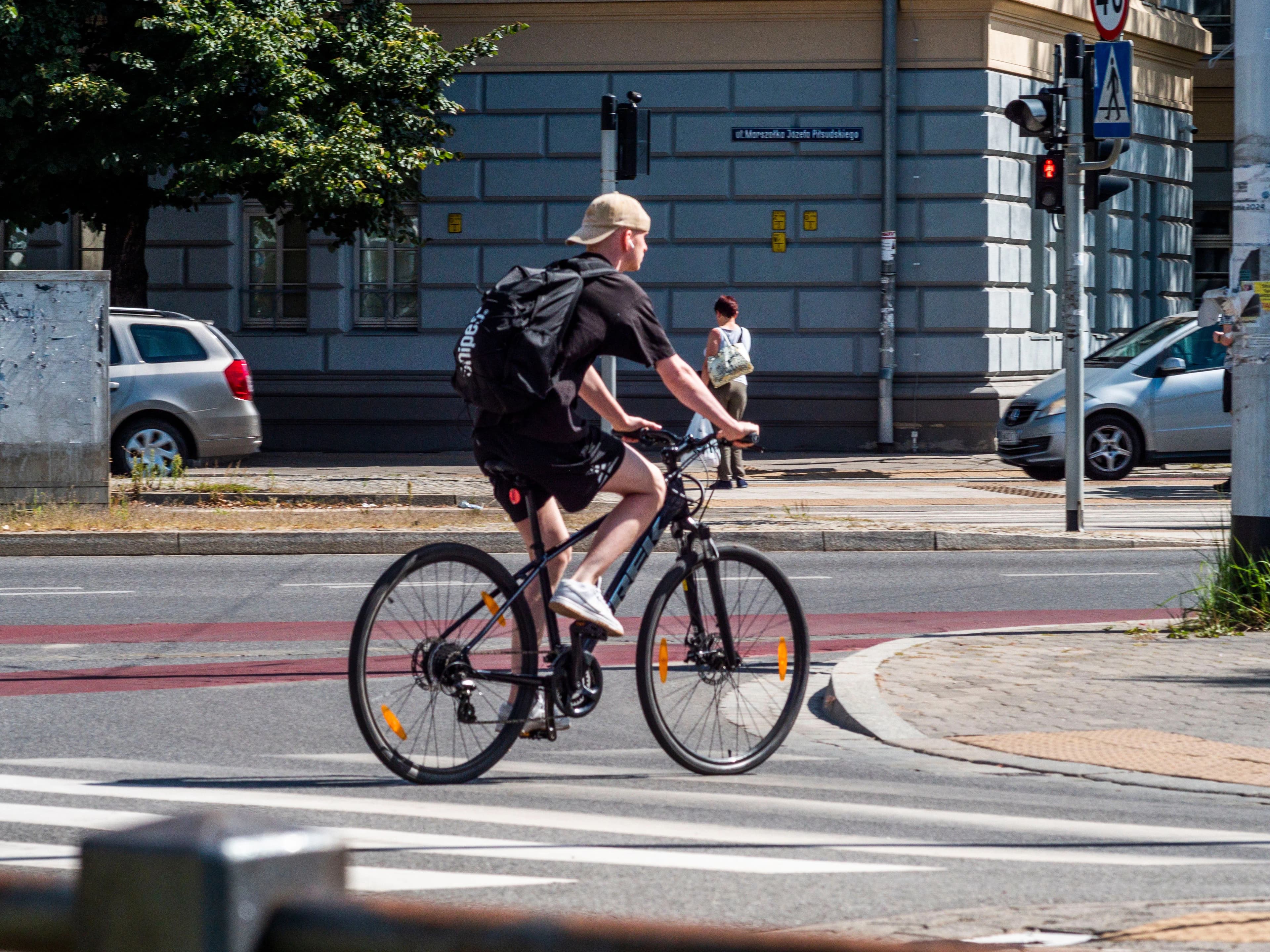
Overtaking a cyclist mainly takes space. As a guideline, allow about a metre of sideways distance, more at higher speeds. If the road is too narrow to pass safely, you stay patiently behind the cyclist until there is room. Cyclists swerve unexpectedly to avoid a pothole, an opened car door or a pedestrian, so always keep a margin.
Before overtaking, check your mirrors, signal in good time and don't steer back to the right too quickly afterwards. A cyclist you've just passed still needs space.
Turning right: the most dangerous moment
A particularly risky moment is turning right while a cyclist is riding beside you. Look in your right exterior mirror AND over your right shoulder before you start to steer. A cyclist can approach faster than you think, especially an electric one. If he has priority or is already riding beside you, let him pass first.
Cycle paths and crossing points
Where a cycle path crosses a side street, you have to take cyclists from both directions into account. At a cycle crossing, you slow down and are prepared to stop. Even in zones where cyclists and cars share the space, driving calmly and predictably is the best strategy.
How to judge cyclists
Cyclists behave differently from cars. An electric bike often goes faster than you'd think at first glance. A cargo bike takes up more space and is slower in corners. A child on a bike is less predictable than an experienced adult. Also pay attention to body language: a cyclist who turns their head is probably about to turn or cross, and a cyclist who wobbles may be struggling with wind or a poor road surface.
Children and the unexpected
Around schools, play streets and parks, the chance that someone suddenly crosses is greater. Drive slower than the maximum there and keep your foot near the brake. A ball rolling into the street usually means a child is following it. Examiners call this kind of alertness anticipation, and it's exactly what they want to see.
Pedestrians also don't only cross at zebra crossings. They appear between parked cars, at bus stops, at shops and at schools. Take extra care with people getting off a bus or tram, with children jumping out of a car and with pedestrians absorbed in their phones.
Doors of parked cars
When you drive past parked cars, keep enough distance in case a door opens or someone steps into the street. That also applies when you get out yourself: look behind you first before you open a door. For cyclists, an unexpectedly opened door can have serious consequences.
Speed and eye contact
The lower your speed, the more time you have to react and the smaller the consequences when something goes wrong after all. The difference between thirty and fifty kilometres per hour seems small, but it weighs heavily on braking distance and on the severity of a collision.
Eye contact is also a powerful tool. If a pedestrian or cyclist looks at you, you know they've seen you. If they don't look up, assume they haven't noticed you and be extra careful. Also signal in good time, so they know what you intend to do.
What goes wrong most often
Overtaking too closely, not slowing down at a zebra crossing because no one seems to be standing there at that moment, turning right without a shoulder check and not allowing enough for electric bikes: those are the mistakes that keep coming back. Impatience plays a part too. If you're driving behind a slow cyclist and would rather go faster, you take risks more readily.
Practising in the real world
Drive with your supervisor through a town or village with a lot of cycling traffic. For every cyclist and pedestrian, briefly say what they're doing and what you're going to do. It sounds cumbersome, but it trains your observation. After a quarter of an hour, you notice how much you simply didn't see before. Then practise the situations that make you tense, for example turning right at a junction with a cycle path.
An example: turning right step by step
You approach a junction and want to turn right. Beside you a cyclist is riding on the cycle path, a little behind your car. You can no longer see him in your mirror. What do you do?
You start well before the junction: foot off the accelerator, indicator on, look in your right exterior mirror. You see the cyclist appear briefly and then disappear again. That's the sign that he's in your blind spot. Just before you turn, you briefly turn your head over your right shoulder. He's still there, roughly level with your rear door, riding straight on. You let him pass and only then turn.
A manoeuvre like that takes a few seconds, but it consists of five deliberate actions: slowing down, signalling, mirror, shoulder, and only then steering. In the test that is exactly what's assessed, and in real traffic it's what prevents a collision.
Safety for vulnerable road users is not something you polish up in the last weeks before the test. It's an attitude: driving calmly, looking early and being patient. An examiner quickly notices whether it's a habit or an act, and if you truly have that attitude, you take it with you into traffic after the test.